


This is part two of our series on operational independence. Before reading, we highly recommend checking out the companion piece, “Owning your data and your future: The importance of data independence,” to understand why owning your data is the required first step before you start building on top of it.
The biggest brands in real estate are distracted. Buried under the weight of their own mega-mergers, they are spending their days untangling massive tech stacks and trying to build generic platforms for hundreds of thousands of agents. That consolidation (and its inevitable move toward a “one stack fits all agents” model) is your window to meaningfully differentiate your brokerage.
For years, independent brokerages have fought the franchise giants and the consumer portals by renting software. You bought per-seat SaaS licenses for platforms you would never actually own. You submitted feature requests and waited months (maybe years) for a watered-down update. You moved at the exact pace of your vendor’s roadmap. And in the end, you were left with a generic user experience that looked exactly like the brokerage down the street.
The good news is, that era is over. With the introduction of AI-assisted “vibe” coding, the way we build tech has fundamentally shifted. If you move now, you can build the proprietary moat you have always wanted, without the six-figure budget or dedicated software development team you used to need.
Software as a marketing function
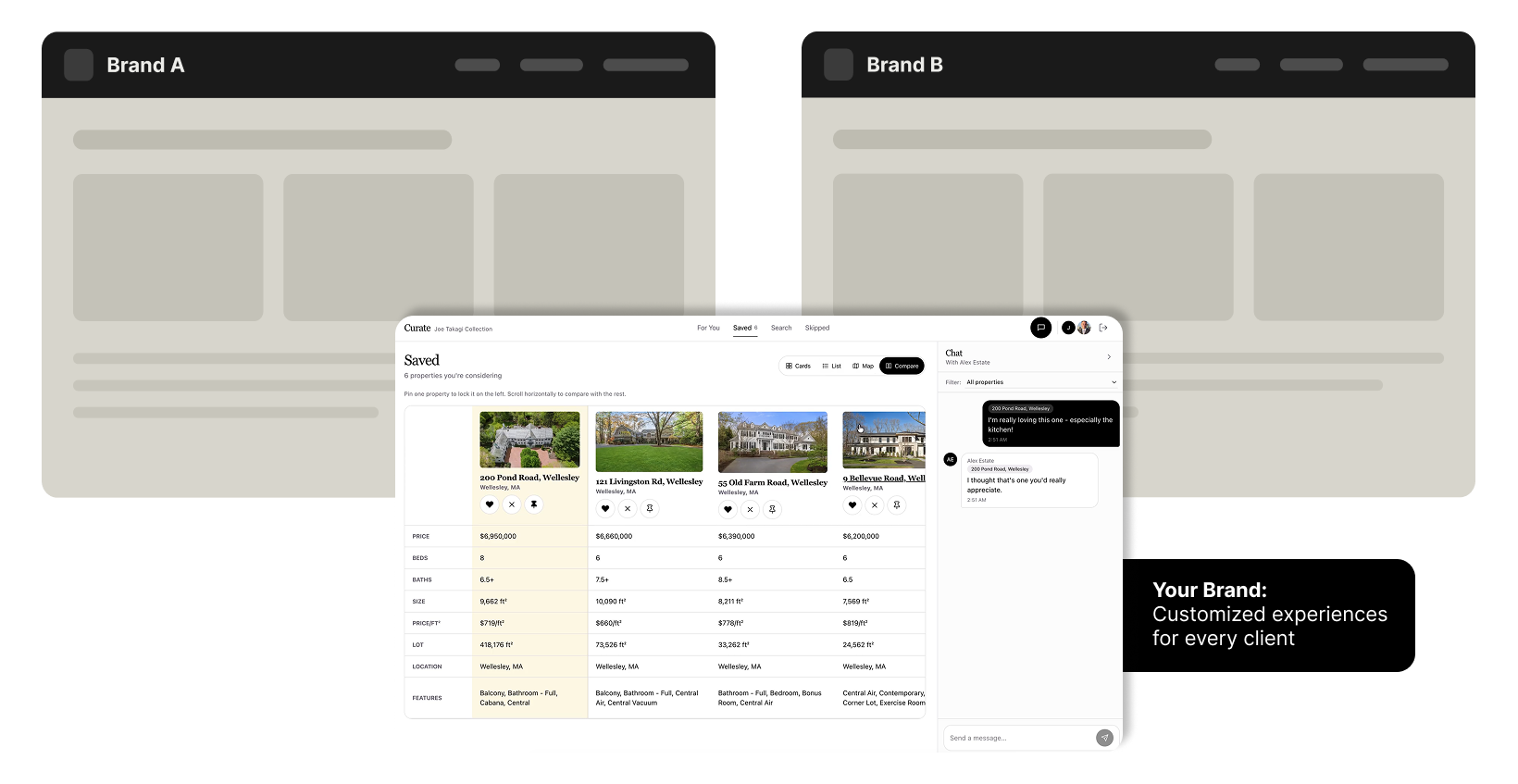
Vibe coding shifts software development out of the hands of SaaS vendors and IT departments and directly into your marketing or operations team’s hands. Using AI tools like Lovable or Replit (or Cloze’s Forge), your marketing director does not need to know how to write code; they just write a prompt in plain English. They describe the app they’re trying to build, tell the AI what data to collect and connect, and the system generates a working app in an afternoon. Doesn’t work the way you envisioned? Just tell the AI what you need adjusted, and get the changes back in minutes. No engineers. No feature tickets. You stop renting generic tech and start building the differentiation and assets you actually own. Let’s look at how this works in the real world.
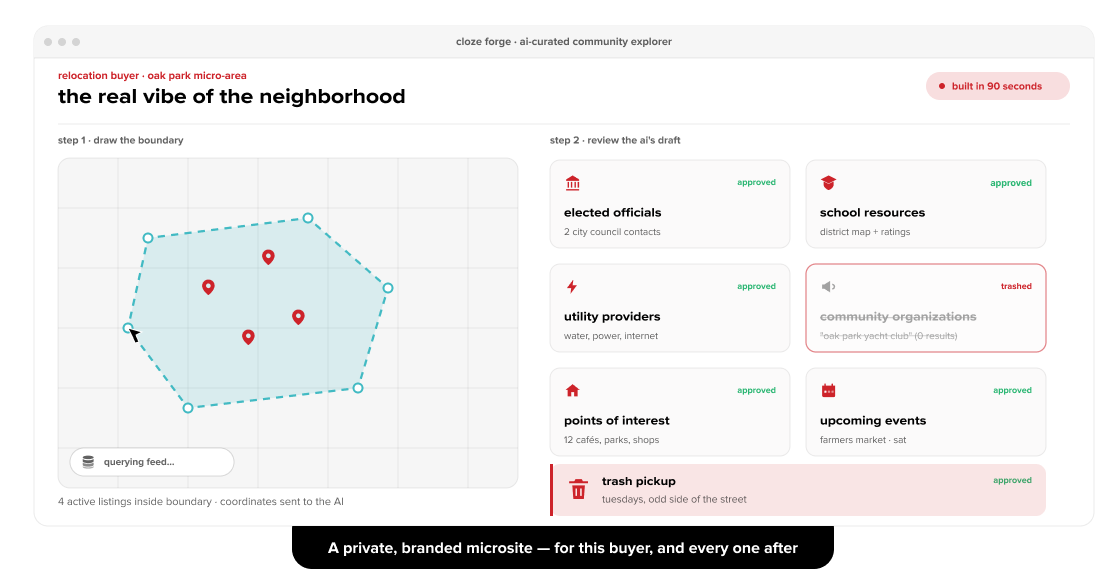
Right now, portals have wedged themselves between your agents and the consumer by owning the search experience. But portals are built for the masses. They fail at hyper-local nuance. Say your agent is working with an out-of-state relocation buyer. That buyer does not just want bedroom counts; they want the true vibe of the neighborhood. Instead of sending a generic IDX link, your marketing team can vibe-code an “AI-Curated Community Explorer.”
The agent opens this custom internal app, pulls up a map, and draws a boundary around the exact micro-neighborhood the buyer is eyeing. The app takes those coordinates and goes to work. It queries your VOW feed for active inventory, but more importantly, the AI scrapes the web to pull together a detailed picture of hyper-local life. It pulls contact info for local elected officials, the relevant school resources, utility providers, active community organizations, points of interest, and upcoming events from local calendars.
The AI drafts a dashboard of these hyper-local widgets. The agent reviews it, clicks “approve” on the accurate insights (like the town’s quirky trash pickup schedule), and trashes the hallucinations. The result is a beautifully branded, private, personalized site generated not just for that specific buyer but for any future buyer as well. It takes 90 seconds, and positions your agent as an irreplaceable local expert curating the messy reality of a community. Try getting a major software platform to build that for you.
The bi-directional data loop
Here is the real magic: This community explorer is also a data capture engine.
When that relocation buyer interacts with their private portal to click on a school resource widget or save a listing, that behavior does not vanish into a third-party vendor’s black box. It pipes bi-directionally back into your CRM and ideally, tied into the rest of your real estate platform through a common data layer, like the Cloze Intelligence Engine. Your agent gets an instant push notification that the buyer is active. More importantly, you are capturing behavioral data that the portals will never see. That is what true data independence looks like.
The reality check
Now here’s the reality check. If you just let an AI loose on real estate data to scrape local school resources and community boards, you’re inviting a disaster.
AI does not understand liability. If your custom app decides to pull subjective school ratings or summarize an area as “safe for families,” you just committed digital redlining. You are instantly on the hook for a Fair Housing violation.
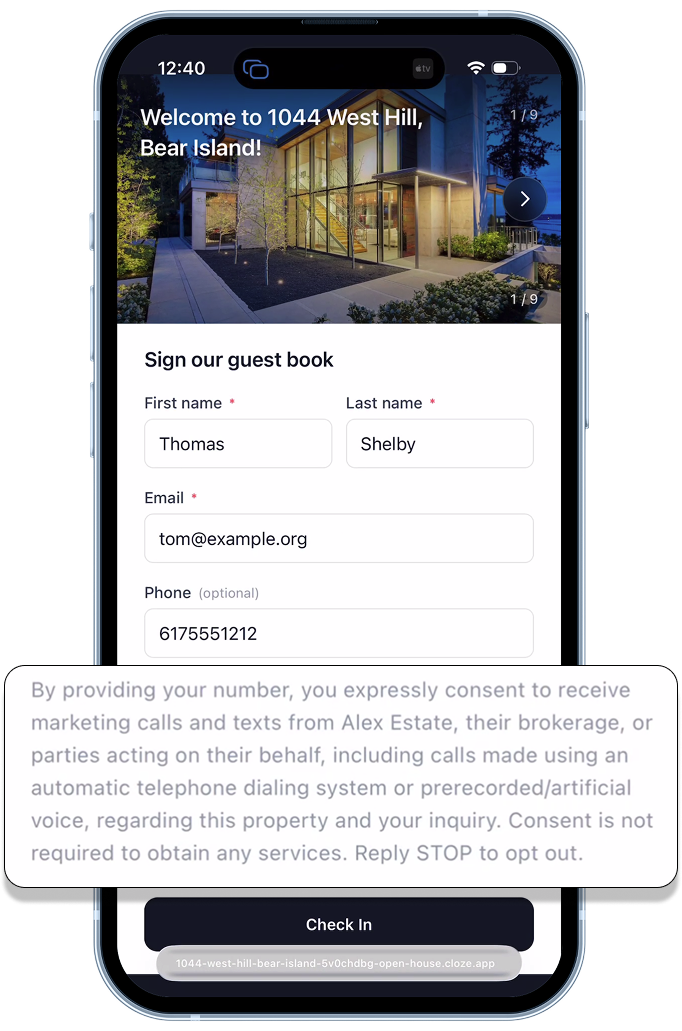
Then there is the API nightmare. When an amateur developer connects an AI app to a brokerage database, the API does not magically know to only pull public data. It will happily expose agent commission splits, private remarks, and seller financial histories to the public internet. A recent cybersecurity study by RedAccess found over 5,000 AI-built apps doing exactly this. If the app captures a phone number without proper TCPA disclosures, you invite massive fines. You need the speed of vibe coding, but you can’t take a chance on unsupervised AI. If you go down the DIY road, be sure your team knows how to spot and close these loops and avoid the compliance pitfalls.
 The Forge safety net
If you’d prefer to build with a purpose-built safety net, take a look at Cloze Forge. Think of Forge as the invisible safety net sitting underneath the apps your marketing team builds. It enforces your compliance rules automatically at the infrastructure level. When your team builds that Relocation Brief and deploys it through Forge, the system engages immediately. It actively sanitizes the prompts. While the AI pulls together the local data, Forge takes into consideration Fair Housing Statutes and avoids pulling demographic data or subjective crime stats that would violate them, and restricts it strictly to verifiable civic and market data. (Note, of course, that the final responsibility for ensuring compliance remains, as always, with the agent and the brokerage.) It masks your databases so private agent remarks never see the light of day. When the client asks a question through their portal, Forge encrypts the message and routes it safely into the agent’s CRM timeline. Your marketing director did not write a single line of security code. Forge just handles it.
Where to start
You do not need a development team to get started. You need a clear problem and an afternoon.
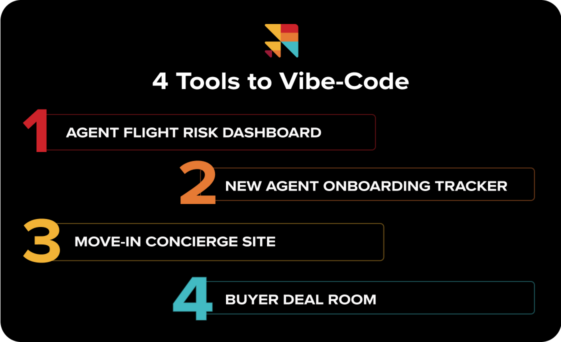
Four tools your team could build this month
These are not hypotheticals. Each one solves a real brokerage problem and can be described to a vibe coding tool in plain English by someone who has never written a line of code.
Agent Flight Risk Dashboard. Pull CRM login frequency, transaction activity, and showing history into a single weekly view for your managing brokers. When a mid-tier producer goes quiet, you see it before they start interviewing.
New Agent Onboarding Tracker. A simple checklist app that walks a new agent through their first ninety days, tracks completion, and sends reminders automatically. No more onboarding falling through the cracks when a managing broker is stretched thin.
Move-In Concierge Site. A branded site that hands every new buyer the practical map of their home: utility setup, trash and recycling schedules, transit, and the local spots worth knowing. It turns the most stressful week of the move into a white-glove handoff your agent gets full credit for.
Buyer Deal Room. A private page for each client that shows where their transaction stands, what happens next, and who owes what. It kills the silence between contract and close, and the 11pm “any update?” text along with it.

Your first vibe coding session: A simple checklist
- Define the one problem you are solving. Resist the urge to build everything at once. Pick the workflow that is currently living in a spreadsheet or an email chain and costing your team time every week.
- Write a one-paragraph description of what the tool needs to do. Include what data it should pull from, who will use it, and what a successful output looks like. Plain English is the only language you need.
- Choose your platform. Replit and Lovable are the most accessible starting points for a non-technical team. If you are a Cloze Enterprise customer, Forge Studio is purpose-built for brokerage data and handles the setup that would otherwise slow you down.
- Prompt, test, and refine. Describe your tool to the AI, review what it builds, and give feedback in plain language until the output matches what you envisioned. Expect to iterate. That is normal.
- Before you deploy, run a compliance and security review. Have someone on your team, or a trusted outside resource, confirm that the tool handles client data correctly, includes required disclosures, and does not expose information it was never meant to share. (Forge users: this step is handled at the infrastructure level. You do not need to manage it separately.)
Which leaves you with a decision to make.
Stay on the vendor roadmap and you know exactly what you get: the same tools as the brokerage down the street, the same generic agent experience, and the same conversation about why your top producers are fielding calls from competitors. That path is familiar. It is also a slow retreat.
The alternative is to build. Not everything at once. One problem, one tool, one workflow that reflects how your brokerage actually operates. That is all it takes to start closing the gap between the experience you are delivering today and the one your agents and clients are waiting for.
Your competitors are buried in integration backlogs. You are not. Use the time. The relocation brief in this article took an afternoon to build. Your brokerage has a dozen problems just like it waiting to be solved. The window your competitors are ignoring is the same one you are reading about right now.