


The real estate industry is facing a perfect storm. Transaction volumes remain flat—4.25 million homes expected to sell in 2025, barely up from 4.06 million in 2024. Homeowners are staying put longer, averaging 8 to 10 years in their homes due to locked-in low mortgage rates and economic uncertainty. Operating costs keep rising while deal flow stays stagnant.
In this environment, brokerages can’t afford to waste opportunities. Yet most are doing exactly that.
The average homeowner knows 9 to 12 real estate agents. They have a cousin who just got licensed, a neighbor who sells part-time, and a parent from their kid’s soccer team. But when it’s time to transact, most sellers interview only one agent—and they choose whoever they’ve heard from most recently.
Staying top-of-mind isn’t optional in this environment. It’s the difference between being chosen and being forgotten. That means staying visible can’t be something agents do when they have time. It has to happen consistently, whether they’re busy or not.
But here’s the problem: most agents lack the systems, time, or discipline for consistent follow-up. As a result, contacts fade into the background. These overlooked individuals—people the agent knows but doesn’t actively engage with—are called shadow contacts.
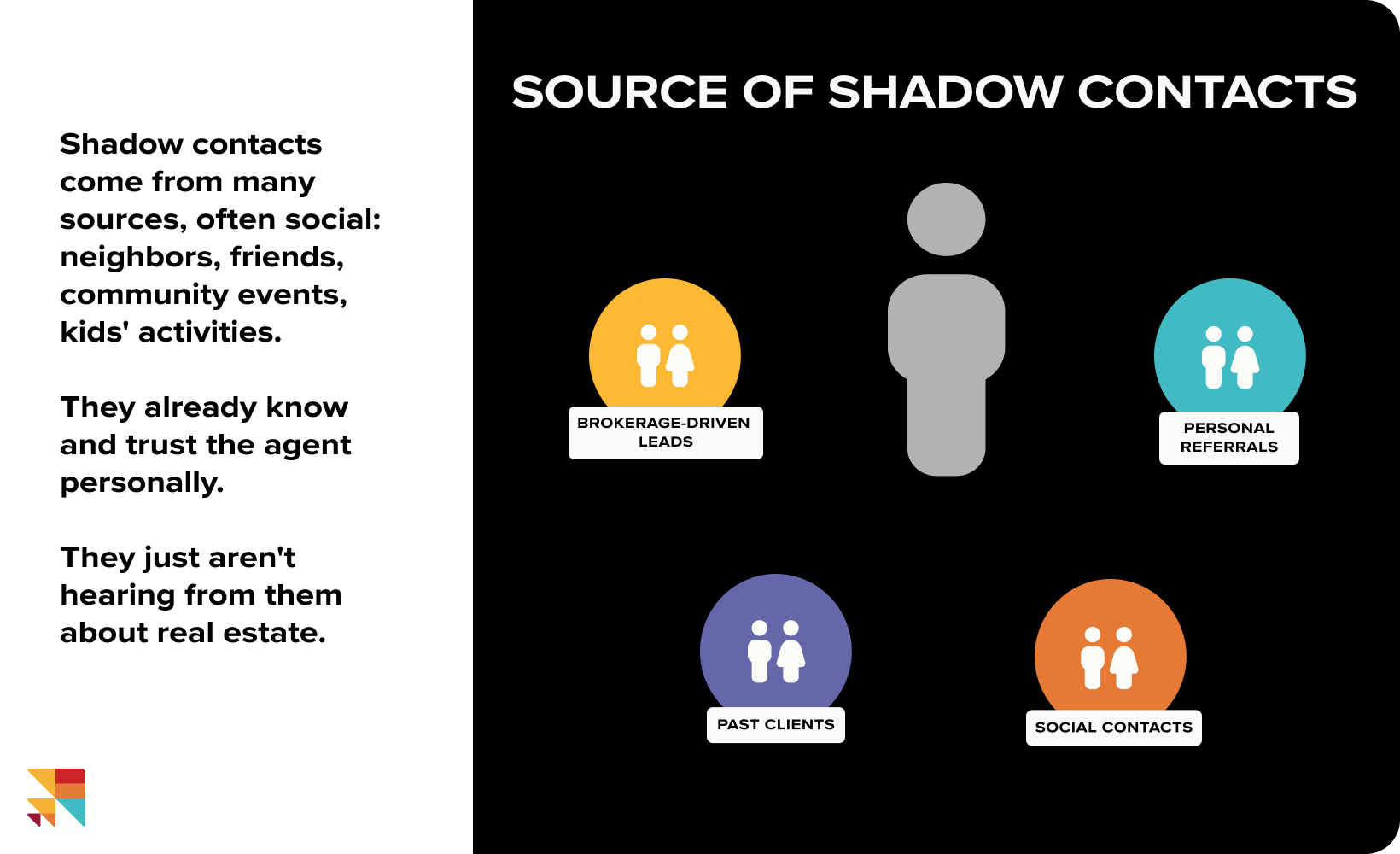
Shadow contacts can come from many sources, including abandoned website or showing requests, clients who engaged once but never completed a transaction, and former clients who haven’t heard from their agent since closing. But often, they’re social contacts: neighbors, friends, family members, people met at community events or through kids’ activities. They already know and trust the agent personally. They just aren’t hearing from them about real estate. In many cases, this social network makes up the majority of an agent’s shadow contacts.
These are relationships that already exist. They just aren’t being maintained or activated.
And while these contacts sit untouched by the agent that knows them, someone else is reaching them. Increasingly, that someone is a national platform with a high-traffic website, sophisticated engagement systems, and a vertically integrated business model designed to capture and monetize consumer relationships before they ever speak to an agent.
The threat to brokerage profitability isn’t just market conditions. It’s disconnection. And it’s costing you more than you realize.
The 88% problem: How much of your database is going dark
Most brokerages rely on individual agents to maintain their databases and follow up consistently. The assumption is that agents will stay in touch with past clients, nurture their sphere, and keep relationships warm between transactions.
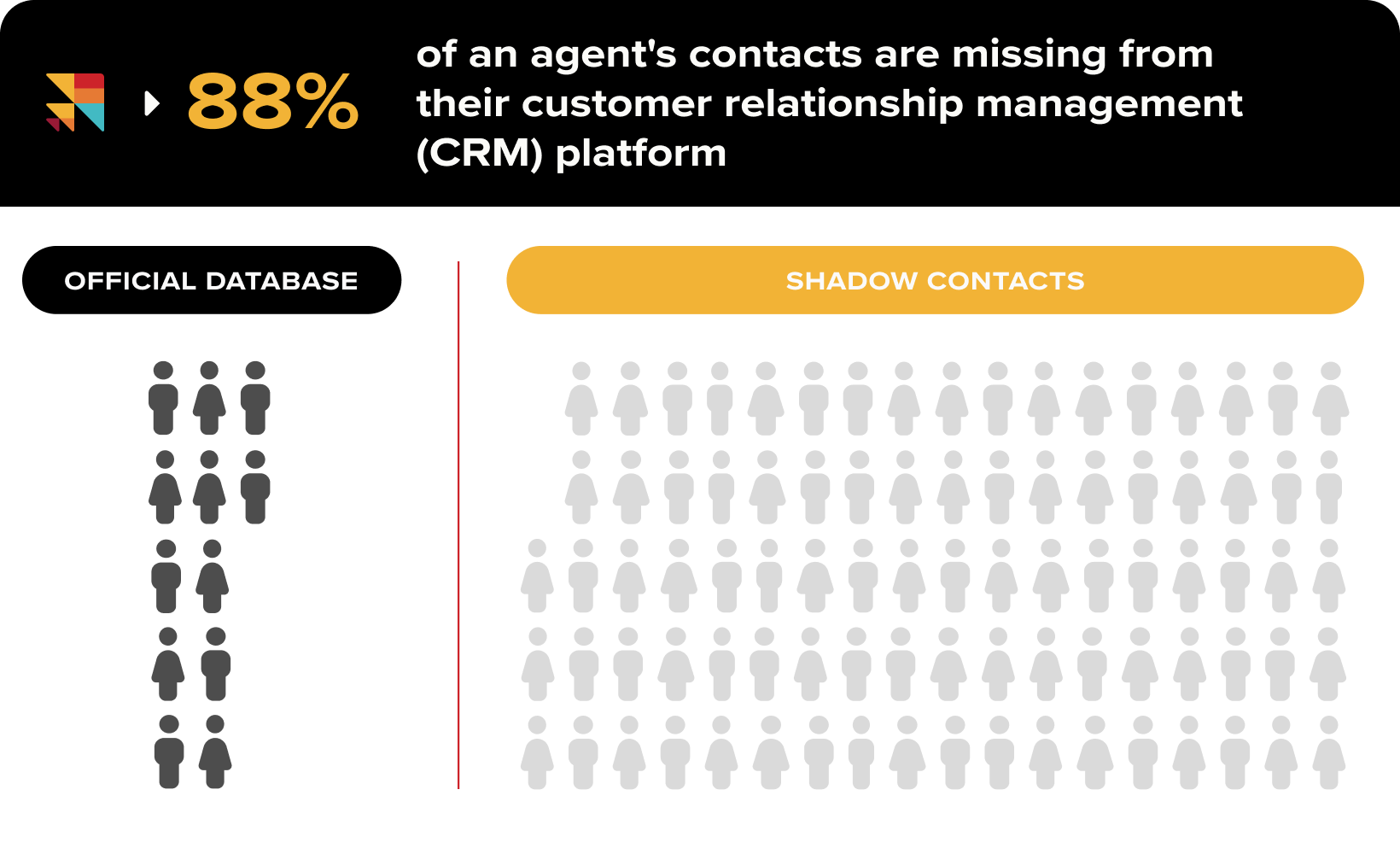
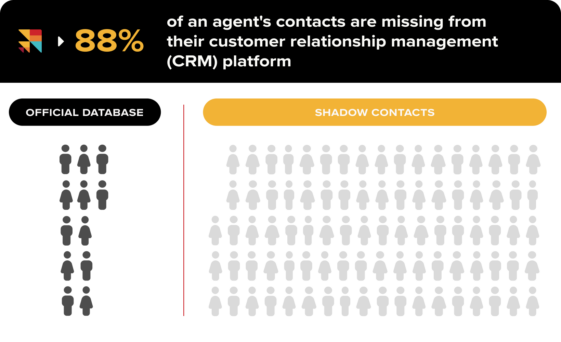
But Cloze’s analysis of agent contacts reveals a startling reality: over 88% of an agent’s contacts are missing from their customer relationship management (CRM) tool — and therefore aren’t being actively marketed to.
These aren’t cold leads or strangers. They fall into three categories:
Past clients who have done business with the agent but stopped receiving regular communication after closing. The relationship existed, delivered value, and then went dormant.
Personal referrals and brokerage-driven leads that expressed initial interest but never completed a transaction.
Social contacts the agent knows personally but has never done business with—neighbors, friends, family members, parents from their kids’ sports teams, and people met at community events. Often, this group makes up the majority of shadow contacts. They already know and trust the agent, but the agent has never systematically stayed in touch about real estate.
All three groups represent real opportunity. All three are being neglected.
Think about what that means.
If an agent knows 500 contacts, only 60 are getting consistent outreach. The other 440 are shadow contacts—people who either worked with the agent in the past or know the agent personally, but aren’t hearing from them regularly.
These are relationships that went dormant because the agent didn’t have systems to maintain them. And in many cases, they’re relationships that never even got the chance to turn into business because the agent never stayed visible.
According to the National Association of REALTORS, more than 65% of an agent’s business comes from repeat and referral sources each year. Top-performing agents often report figures well over 65%. When you consider that 88% of contacts—including those who already know and trust the agent—are missing from active nurture programs, you’re looking at a massive channel of potential business that’s completely underserved.
The financial impact
The cost of neglecting shadow contacts is measurable. In the Ninja Selling model, for example, each engaged contact represents an estimated $1,000 in annual gross commission income. If even 100 shadow contacts per agent remain untouched, a 25-agent brokerage could be losing over $2 million in gross commission income annually.
That’s not theoretical revenue. That’s money walking out the door because relationships aren’t being maintained—while national platforms step in to capture those same contacts through systematic engagement and deep pockets.
Four ways Connected Brokerages activate shadow contacts
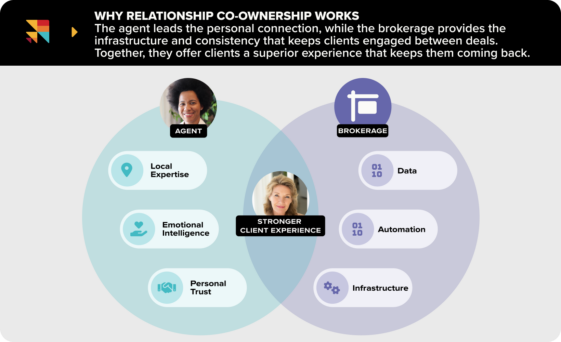
The challenge is that no agent, even the very best, has the bandwidth to regularly check in with everyone they know. Clients naturally fall by the wayside over time, and social contacts often aren’t engaged with professionally at all. Brokerages can help address this by investing in systems that make consistent engagement possible without overwhelming agents who are already managing active transactions.
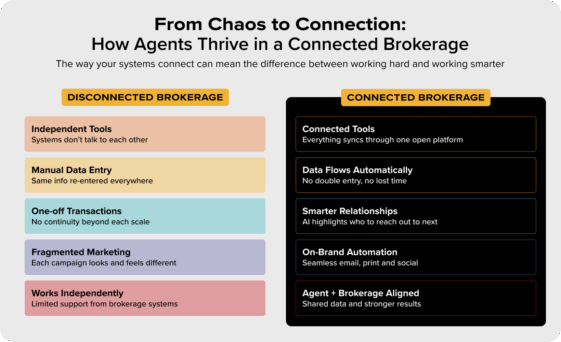
This is where Connected Brokerages differentiate themselves. Instead of relying solely on agent initiative, they provide the infrastructure that makes relationship maintenance systematic rather than aspirational. They use technology to automate outreach, monitor engagement, and surface opportunities—all while reinforcing the agent’s personal brand and local expertise.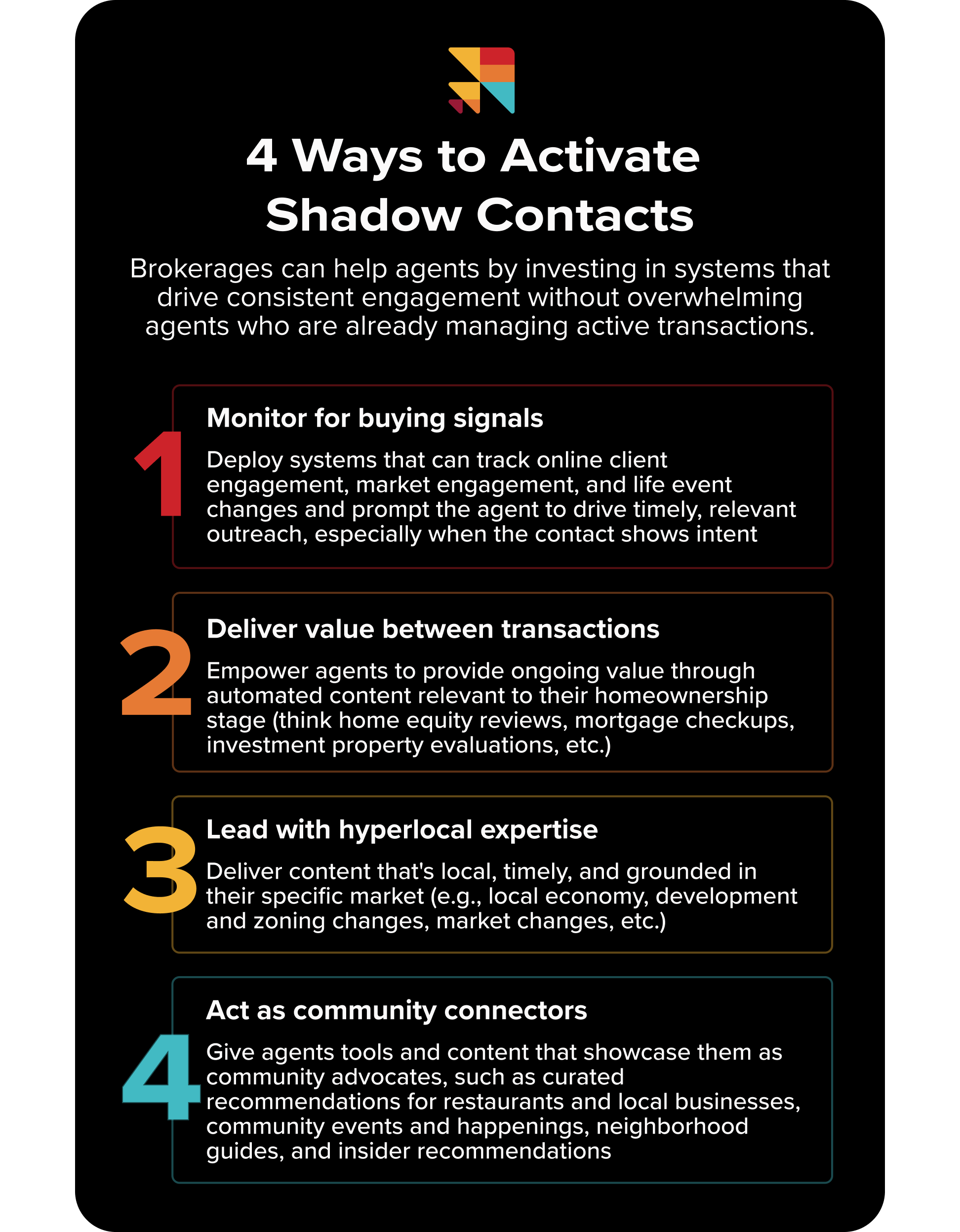
Here are four specific ways Connected Brokerages turn shadow contacts into active relationships:
1. Monitor for buying signals
Instead of waiting for agents to notice who’s showing interest, Connected Brokerages use behavioral data to surface contacts who are likely to transact.
The system tracks:
- Email opens and link clicks
- Website browsing behavior
- Saved searches or home value inquiries
- Life event changes (job moves, family changes, marriage, divorce)
- Market engagement (opening local housing reports, clicking on listings)
When a shadow contact starts showing intent, the system alerts the agent. This prompts timely, relevant outreach before the contact drifts toward a competitor or third-party platform.
2. Deliver value between transactions
The most effective follow-up doesn’t ask for business. It delivers value that positions the agent as a long-term advisor rather than just a salesperson.
Connected Brokerages empower agents to provide ongoing value through automated content that feels personal because it’s relevant to where the contact lives and their homeownership stage. This includes:
- Home equity reviews tailored to local market activity
- Mortgage checkups that help clients evaluate refinancing options
- Investment property evaluations that track rental rates and market conditions
- Market updates specific to their neighborhood, not generic national trends
The content is created and scheduled by the brokerage, but it’s sent from the agent’s email with room for personalization. This keeps the agent visible and helpful without requiring them to create everything from scratch.
3. Lead with hyperlocal expertise
When homeowners hear from national platforms, they get generic information. Connected Brokerages help agents deliver content that’s local, timely, and grounded in their specific market. This builds credibility and reinforces why working with a local agent matters.
Examples include:
- Monthly neighborhood updates on local economic changes
- School zone updates, development changes, or zoning decisions
- New businesses, restaurants, or community services
- Curated recommendations for local events and hidden gems
This type of content does double duty. It keeps the agent top-of-mind while also positioning them as a community connector who knows the area intimately.
4. Act as community connectors
Beyond real estate expertise, agents thrive when they’re seen as community advocates. Connected Brokerages support this by giving agents content and tools that highlight:
- Local businesses and restaurants worth supporting
- Community events and cultural happenings
- Neighborhood guides that introduce residents to local services
- “Insider” recommendations that showcase the agent’s deep local knowledge
This approach transforms the agent’s value proposition. They’re not just someone who can help you buy or sell a home. They’re someone who helps you understand and connect with your community, which makes them memorable when it’s time to transact.
The system makes the difference
None of these tactics is revolutionary on its own. Agents have always known they should stay in touch, provide value, and demonstrate local expertise. What Connected Brokerages provide is the infrastructure that makes it happen consistently.
With the right systems in place, shadow contacts don’t stay in the shadows. They become engaged relationships that generate repeat business, referrals, and ancillary service revenue—all without the brokerage paying third-party referral fees.
From shadow to spotlight: Turning neglected contacts into revenue
Shadow contacts aren’t strangers. They’re not unqualified leads or people outside your market. They’re relationships that already exist—former clients, personal referrals, social contacts—sitting in agent databases right now, waiting to be engaged.
The opportunity is immediate. These contacts already have some level of familiarity with the agent. Many already trust them. They just aren’t hearing from them consistently about real estate. And in today’s market, where most consumers interview only one agent and choose based on recent contact, that silence is expensive.
As we said previously, activating just 100 additional shadow contacts per agent across a 25-agent firm captures $2.5 million in gross commission income that would otherwise walk out the door. But the benefit goes beyond immediate transactions. Engaged contacts generate referrals. They use ancillary services like mortgage, title, and insurance. They become repeat clients when life changes require another move. Over time, each activated shadow contact compounds in value—if the relationship is maintained.
This is why Connected Brokerages invest in systems that support consistent engagement. They recognize that in a market defined by flat transaction volumes and rising competition from national platforms, the most valuable asset isn’t new lead generation. It’s the relationships the brokerage already has access to but isn’t fully utilizing.
The choice is clear
Brokerages have two options: continue relying on individual agent initiative to maintain relationships, or build infrastructure that makes consistent engagement systematic and scalable.
The first approach leaves 88% of contacts in the shadows, vulnerable to competitors and platforms with better follow-up systems. The second approach turns those same contacts into active pipelines for repeat business, referrals, and long-term revenue growth.
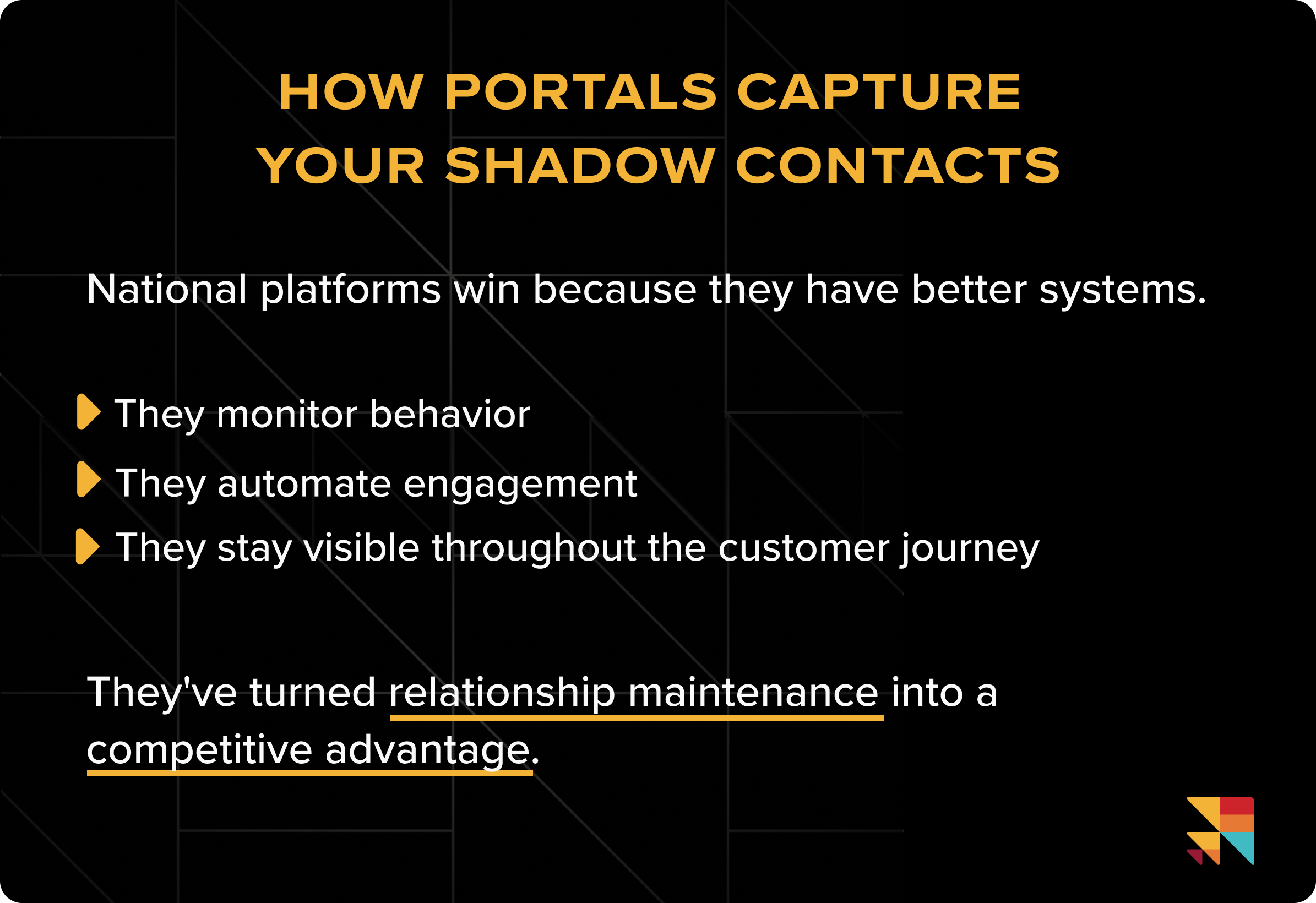
National platforms aren’t winning because they have better agents. They’re winning because they have better systems. They monitor behavior, automate engagement, and stay visible throughout the customer journey. They’ve turned relationship maintenance into a competitive advantage.
Connected Brokerages are doing the same thing—but with one critical difference. They’re supporting agents in maintaining relationships the brokerage and agent already own, rather than paying referral fees to rent relationships from third parties.
The relationships exist. The opportunity is real. The only question is whether your brokerage will activate them before someone else does.